Rapid cure options
Certain systems can shorten the path back to service when job conditions and product limits allow.
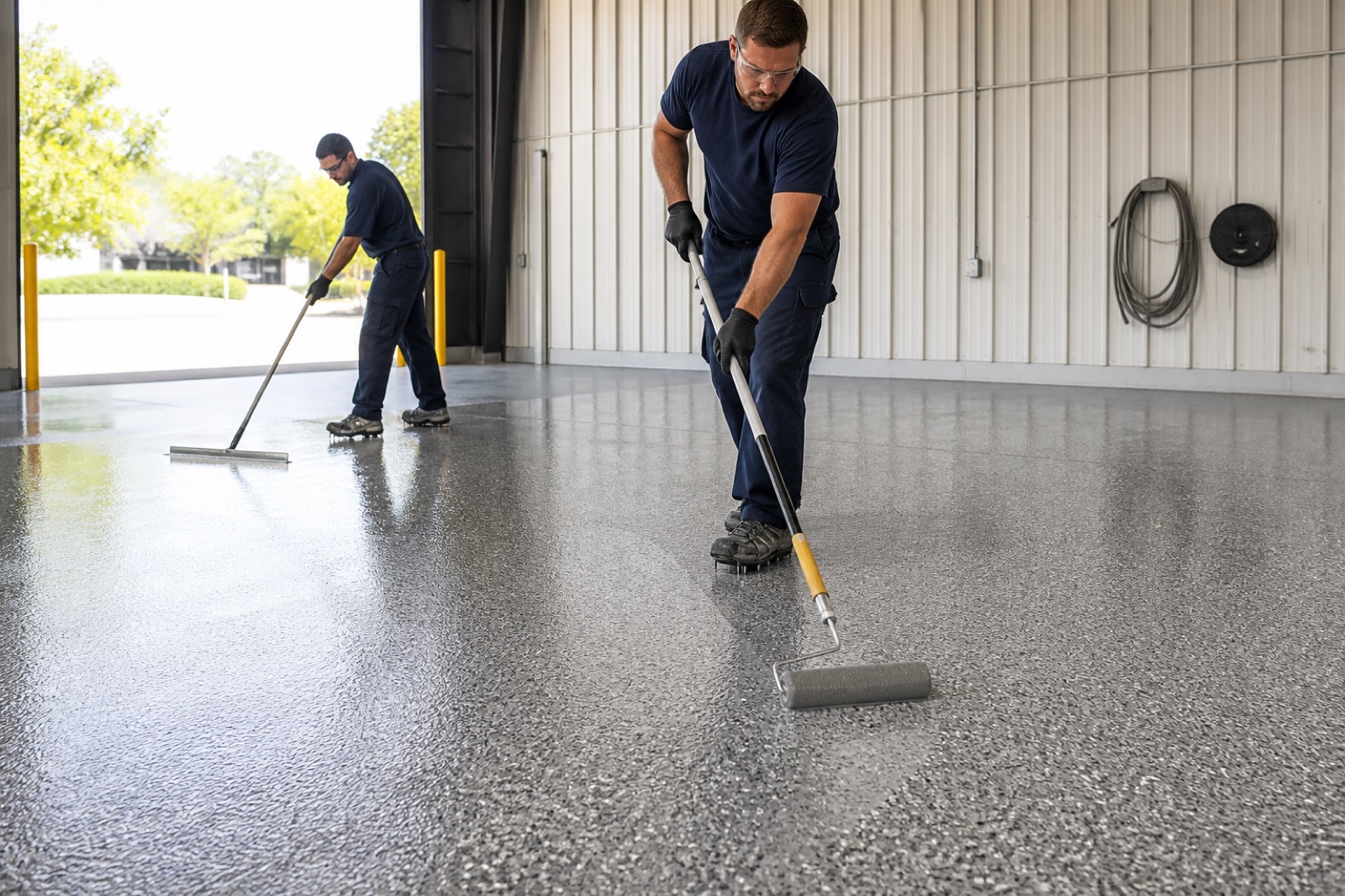
Polyurea and polyaspartic coatings offer fast cure times, excellent durability, and versatile protection for garages, workshops, commercial spaces, and other concrete floors. Depending on the project, they can serve as base coats, build coats, or UV-stable protective topcoats within a complete flooring system.
Polyurea products are often used for fast-curing base or build coats, while polyaspartic materials are commonly selected for durable, UV-stable clear topcoats. The terms are related, but the exact product and role should be identified in the project system.
The exact system depends on slab condition, moisture, intended use, exposure, desired appearance, and schedule. South Carolina heat and humidity can affect working time and cure, so mixing, placement, crew timing, and the protected return-to-service window must be planned carefully.
Certain systems can shorten the path back to service when job conditions and product limits allow.
Polyaspartic clear coats can add abrasion, chemical, and UV resistance to a compatible system.
These materials can serve as base, build, or protective layers within a documented floor system.
The proposal documents preparation, repairs, product roles, decorative media when selected, topcoat, access, and return-to-service restrictions.
Discuss My ProjectProduct chemistry matters, but testing, concrete profile, repairs, mixing, timing, and cure protection create the conditions the system needs.
The slab, use, sunlight, desired finish, temperature, and return-to-service plan guide product selection.
Fast-cure chemistry still requires correct profiling, cleaning, detailing, and approved concrete repairs.
Materials are mixed and applied within their working windows, then protected through the specified cure.
Exact manufacturers and components are documented for each project rather than treated as a blanket claim.
Product names alone do not define the complete system. Each layer should have a documented role and be compatible with the concrete and adjacent materials.
Often used as a rapid-curing base or build layer in compatible systems.
Often selected as a durable, UV-stable clear or pigmented topcoat.
Different layers can combine their strengths within one tested system.
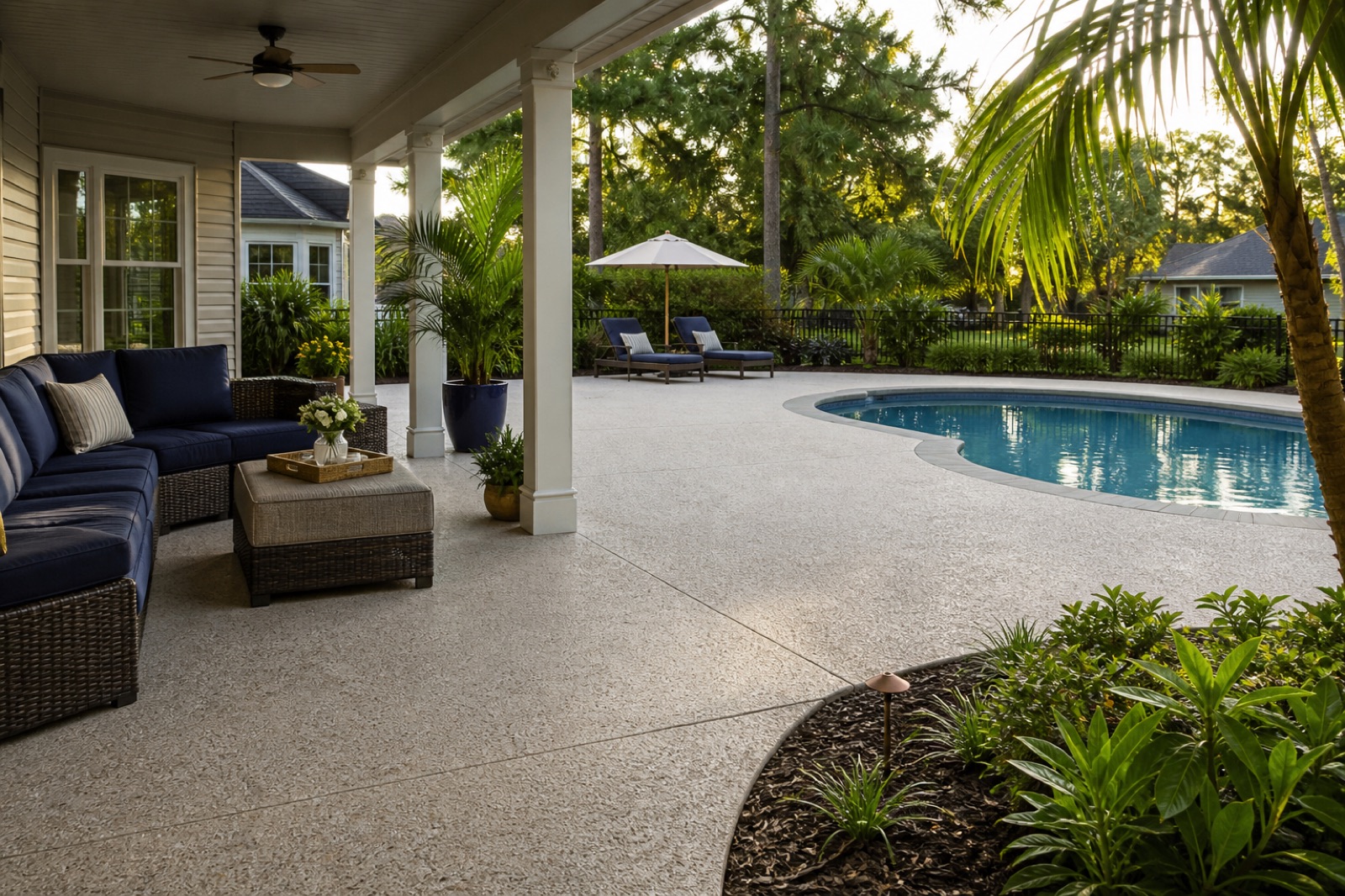
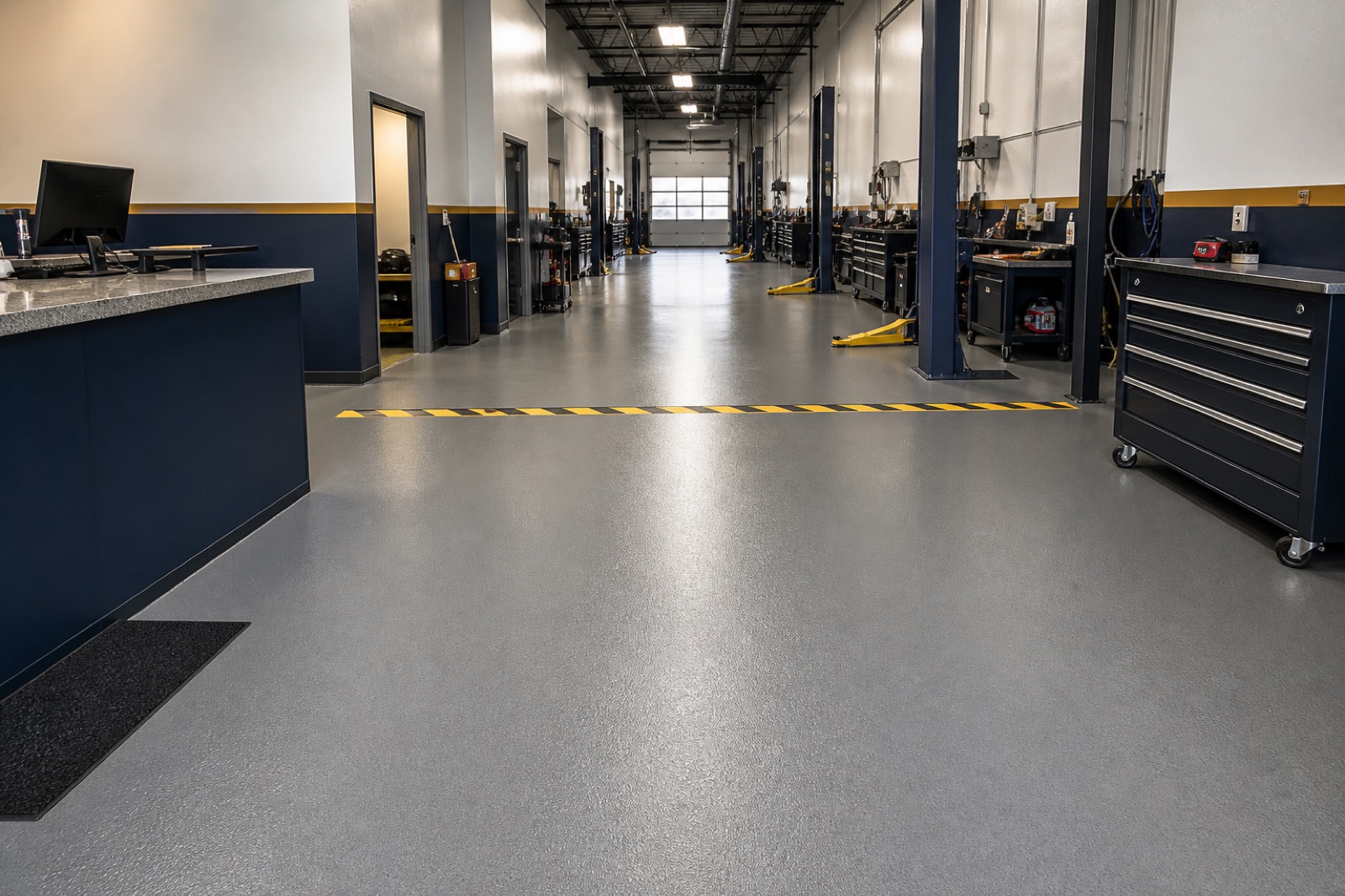
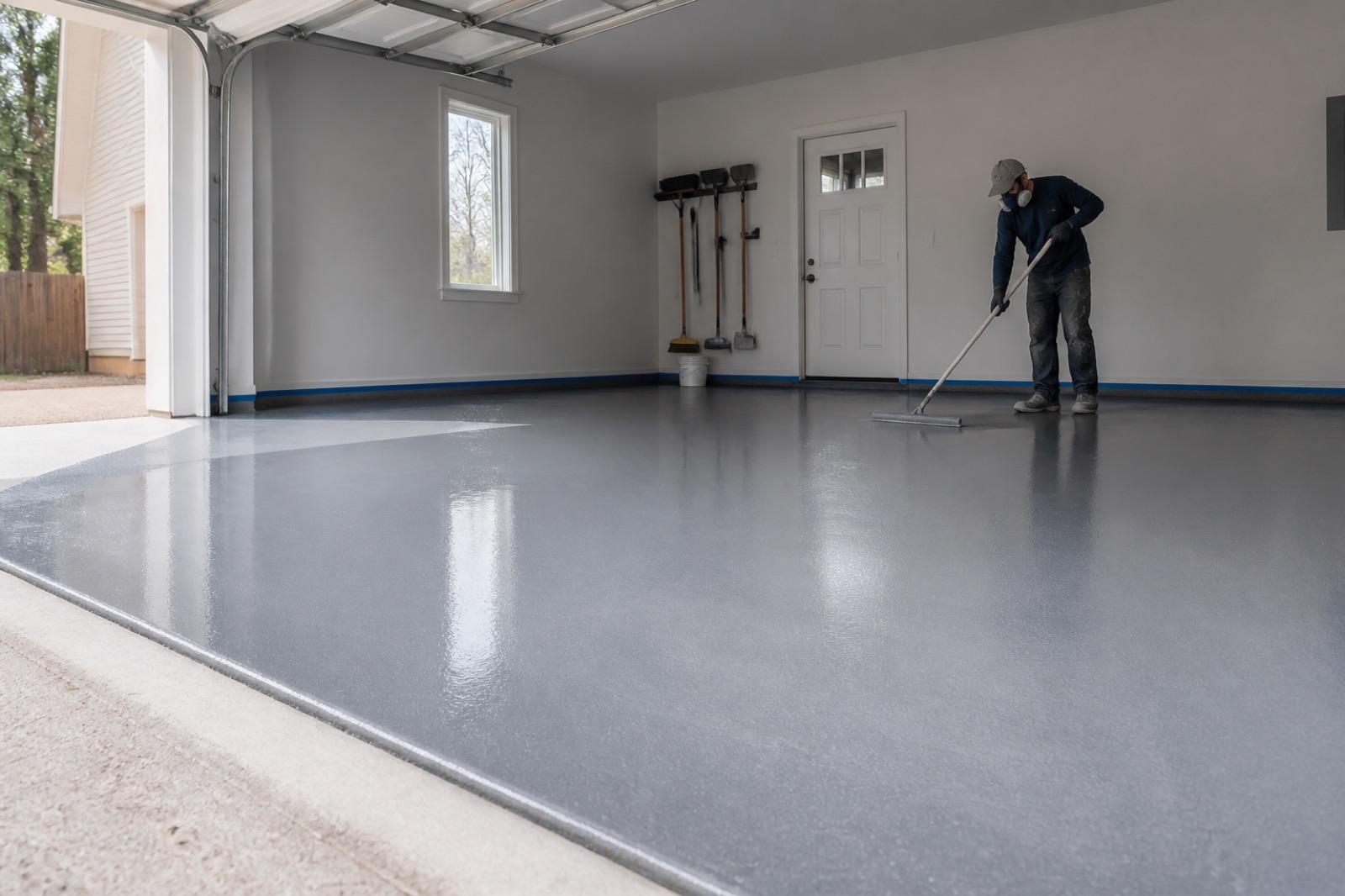
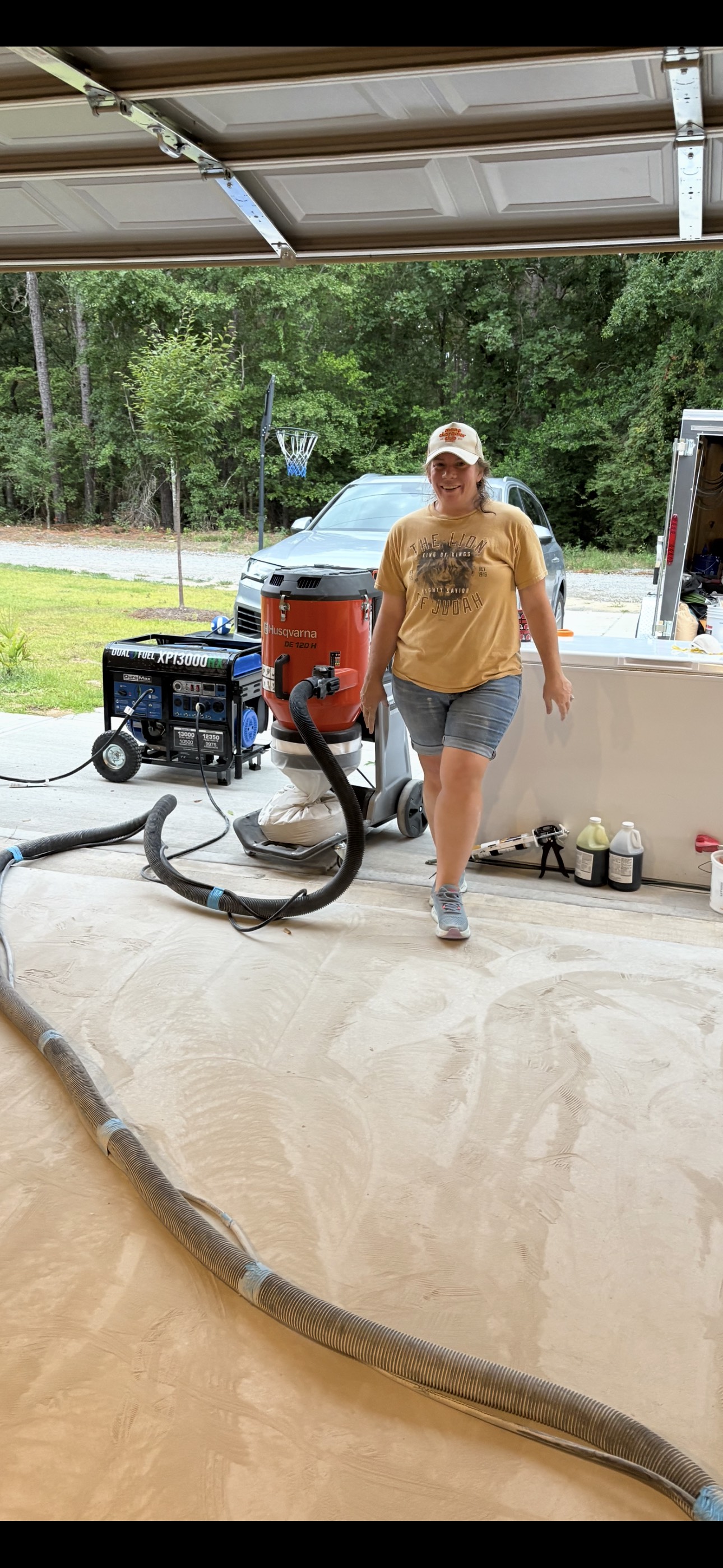
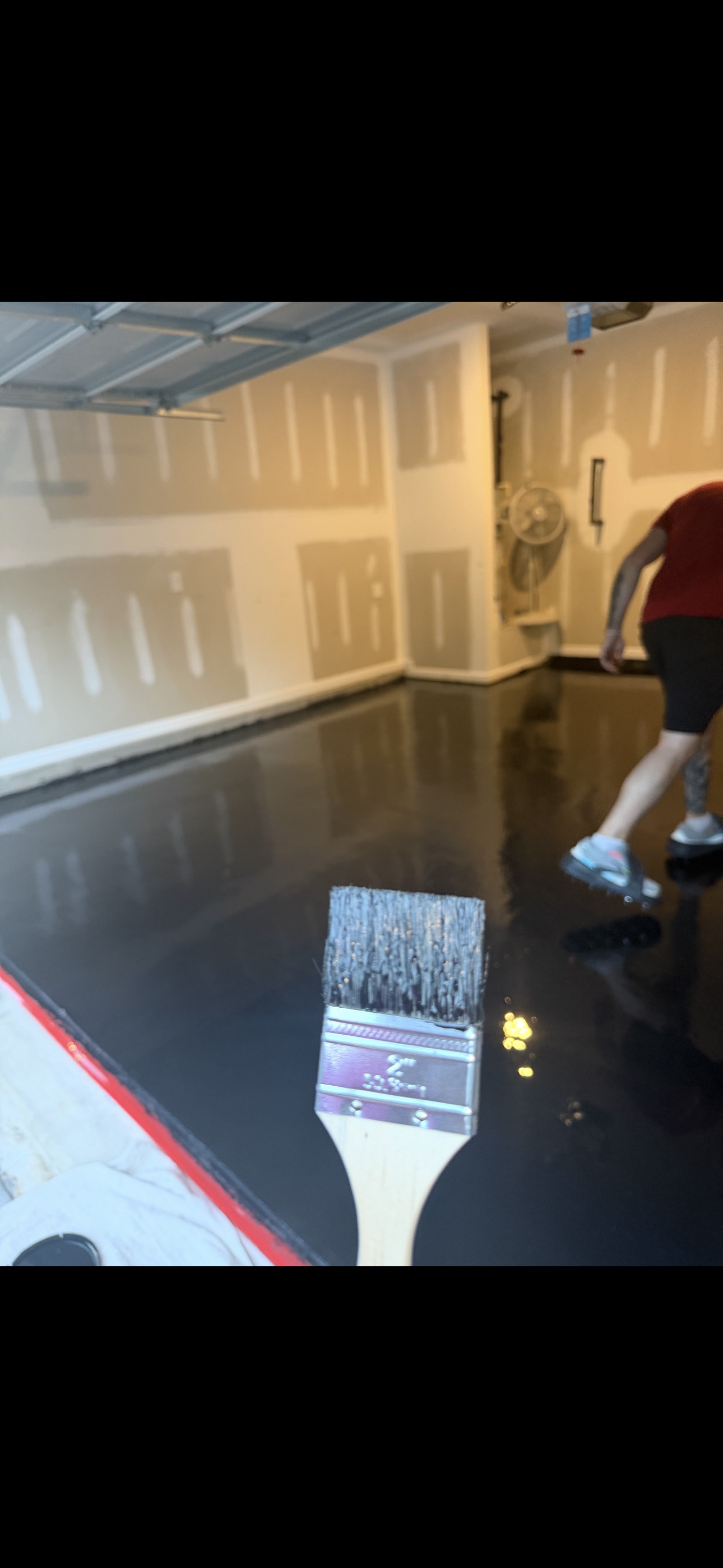
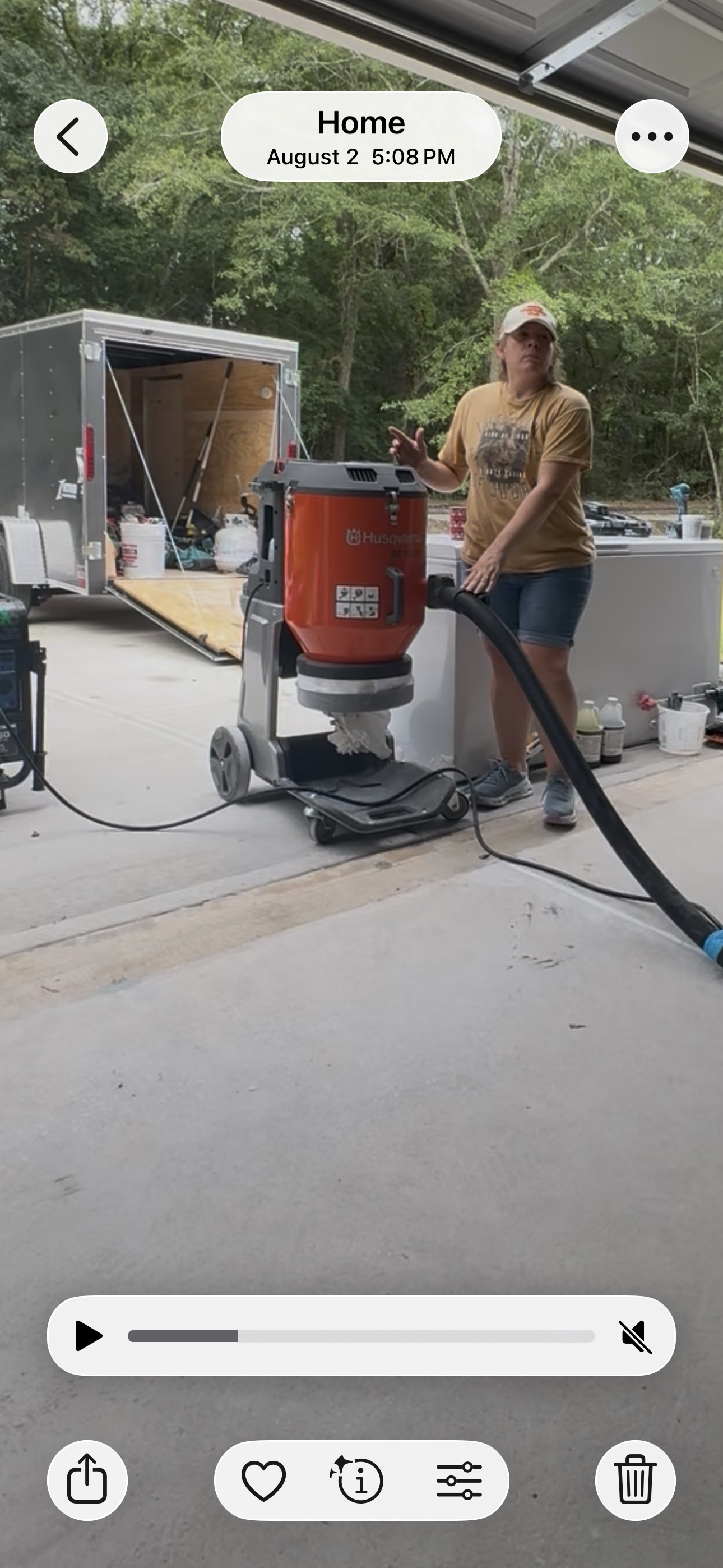
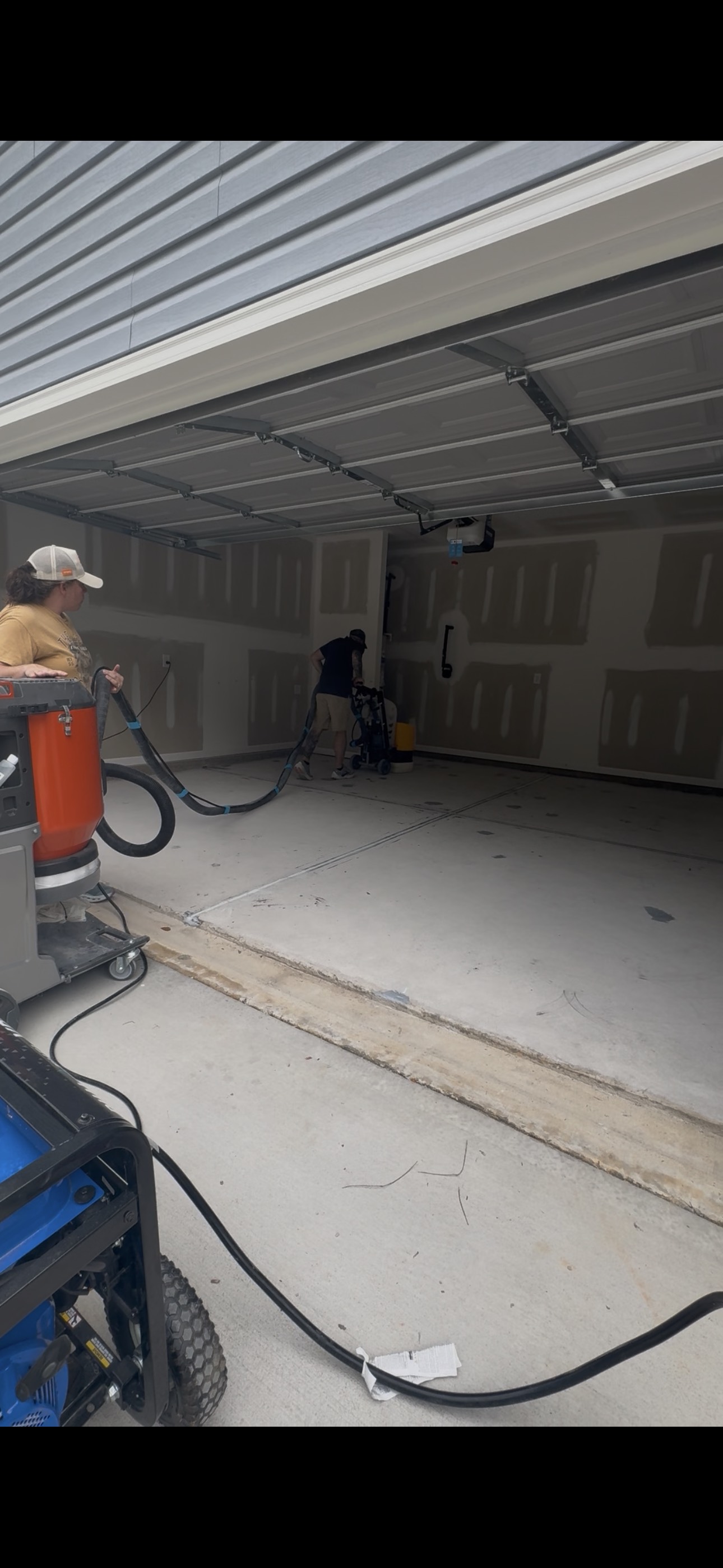
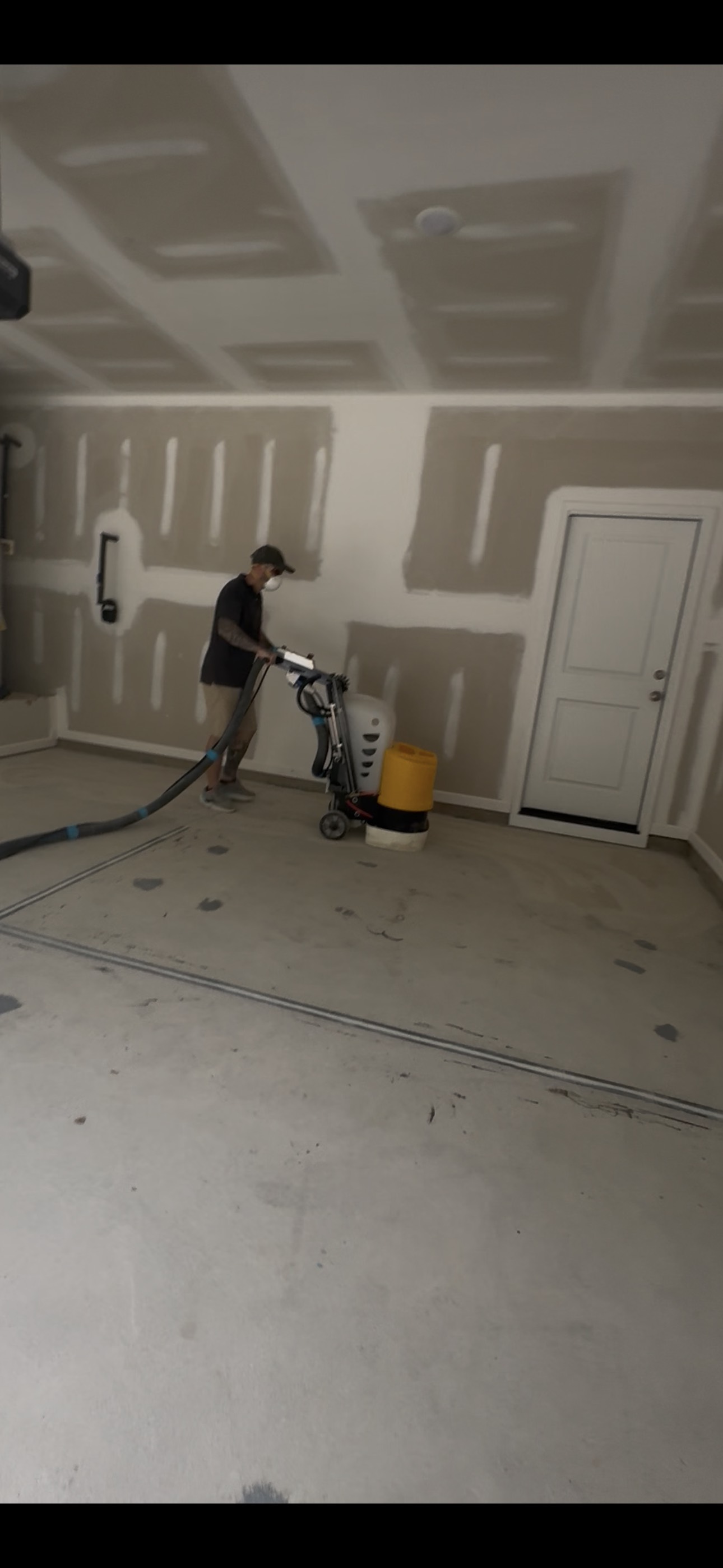
These client-supplied photos show the grinding, dust control, detailing, and coating placement that happen before the finished floor returns to service.
These are general planning answers. The onsite condition and selected product system control the project-specific recommendation.
Request an estimate →Polyaspartic coatings are part of the broader polyurea family, but formulations and uses vary. The project scope should identify the specific products and their roles.
No. Every layer has product-specific recoat and return-to-service windows. Temperature, humidity, repairs, and intended traffic can affect the schedule.
Cracks can often be cleaned and repaired before coating, but concrete can continue to move. A repair improves the surface; it cannot guarantee that a moving crack will never reappear.
Any smooth surface can be slippery when wet. Texture and slip-resistant aggregate can be considered based on the location, cleaning needs, and how the floor will be used.
Different resin families and decorative builds can play different roles. Explore related options before settling on a finish.
Tell us about the surface, how you use the space, and the finish you have in mind. We’ll evaluate the slab and recommend a practical next step.